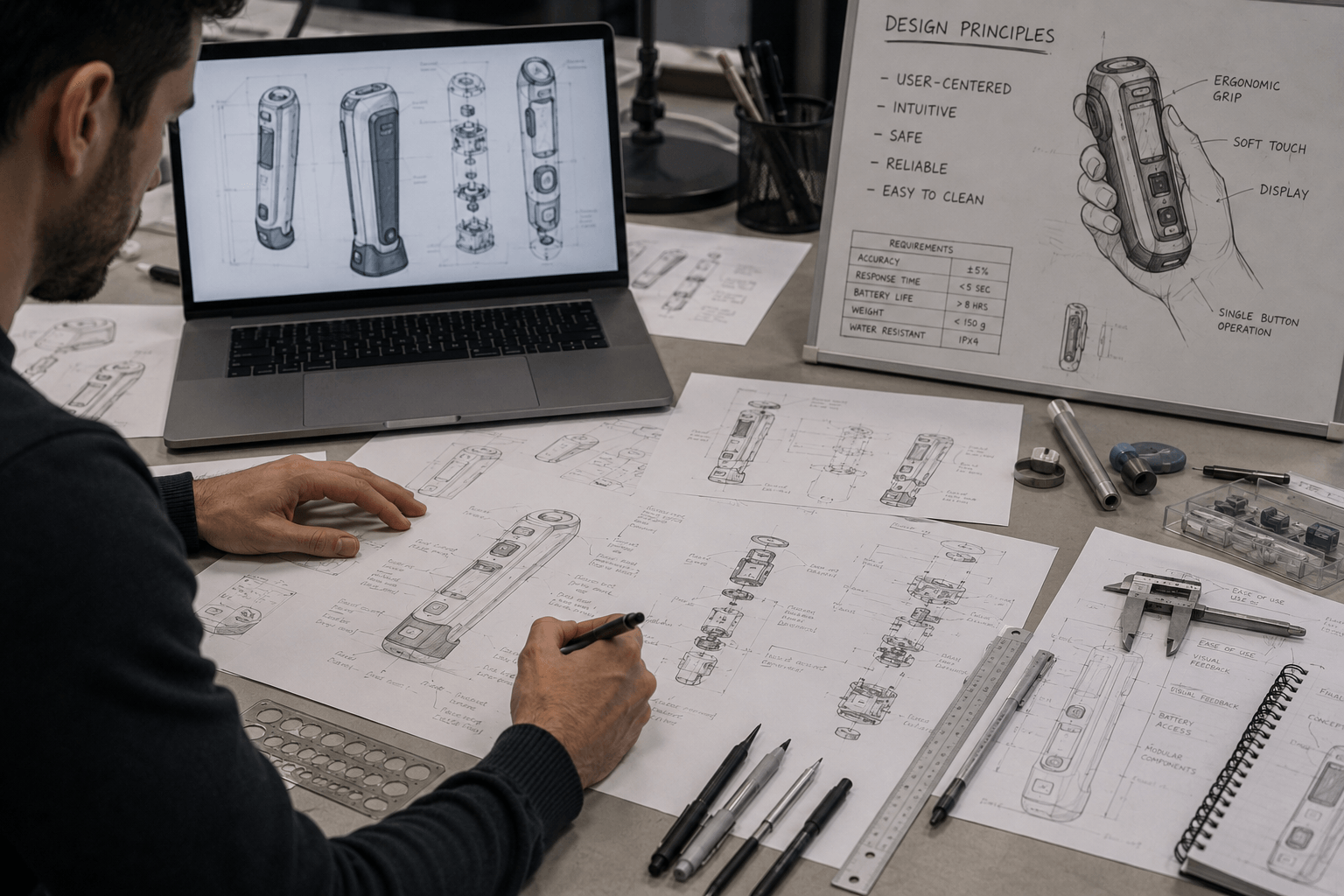
Human factors engineering is all about the interaction between human beings and systems. It’s a critical part of medical device development – here’s how product development teams can use it to build more effective, useful technologies.
For product developers, human factors engineering plays a critical role in understanding usability – is this product actually useful to the end-user? Does it meet the needs of its target audience? Does it do what the developers intended for it to do?
The Importance of Human Factors in Healthcare
Human factors in healthcare take things a step further – not only are developers looking to understand if the product works for its user, but they are also interested in how a medical device or life sciences product fits into the ever-evolving healthcare system. And, perhaps most importantly, how does the device fit into a patient’s experience of health technology?
Take, for instance, a glucose meter designed to help someone manage their diabetes. From a human factors perspective, developers would want to capture:
- Information about how users interact with and respond to the glucose meter
AND - Information about the other devices being used to manage the patient’s diabetes
AND - Feedback from healthcare professionals who need the data to make recommendations for the patient
Learn More: Verification vs. Validation Testing: Product Development Checks & Balances
Using data gleaned from human factors activities helps healthcare medical device developers make more useful, effective products because those products are directly aligned with the user(s) and their use environment. By studying and understanding how the product will fit into a patient’s life and the web of healthcare devices with which they interact, development teams can create technology that doesn’t operate in a silo.

Implementing Human Factors Engineering
Although human factors engineering is mandated by FDA medical device regulations, it’s also just good design practice. Collecting user data and feeding it back into the various product design iterations will ultimately result in a more competitive offering.
And from a safety perspective, incorporating human factors in healthcare can help mitigate potential misuse or harm to a patient by identifying potential problems earlier in the medical device development process. Developers can use human factors work to observe and study how people interact with and respond to their product, which gives them an opportunity to catch issues sooner rather than later.
Here are three practical human factors engineering tips that can help you get started building better healthcare technologies:
1. Start early
It may seem logical to hold off on collecting human factors data until you’re ready to put a fully-formed product in front of its intended users. But the data collected from human factors work should be used to inform your product’s design from the very start of the development process.
Related Reading: Phase Zero: The First and Most ImportantStep in a Product Development Plan
2. Remember that it’s a process, not a task on your to-do list
It’s tempting to treat human factors engineering work as just another item on your long list of things to complete during the product development process. But that really undercuts the value of the lessons your team can derive from human factors exercises.
These activities need to be interwoven throughout the development process – you should be brainstorming, creating, testing, and feeding your findings back into the next round of development.
3. Beware poorly-vetted assumptions
As product developers, we regularly caution our clients to keep this at the front of their minds during the design process: you are not your user. Don’t assume anything about what the user wants, who the user is, or how the user will interact with your system.
Poorly vetted assumptions will ultimately lead to a product that does not serve its intended audience – and therefore does not fulfill its intended purpose in the marketplace.

Build Better Medical Devices with Human Factors Engineering
Human factors engineering is a crucial component of the product development process. If you want to better understand your product’s user and create a more competitive, effective technology, partner with our experienced human factors engineering team.
At Goddard, our team of engineers and designers are well-versed in human factors activities for medical device development, life sciences and diagnostics, and high-tech consumer and industrial technologies.
From concept to production, our highly-skilled engineers and designers deliver a competitive difference with our on-site partnership model, quality commitment, collaborative expertise, and unique employee development programs.
We would love to hear about what you’re working on.
Tell us about your project and let’s begin a conversation about creating products with technical precision and elegant design.