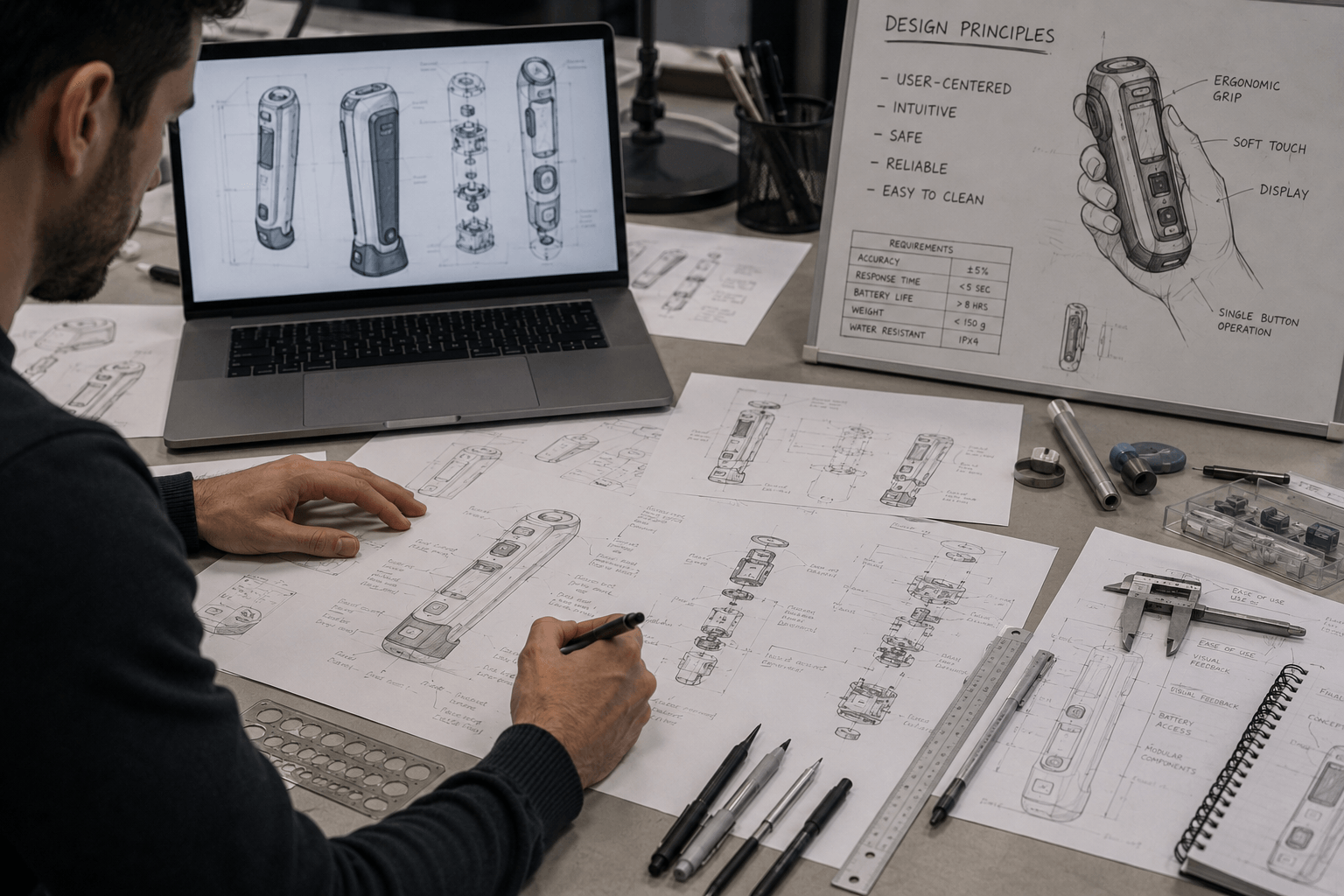
Robotics systems that perform flawlessly in simulation often struggle once deployed. Here are some causes for the disconnect and how to close the gap.
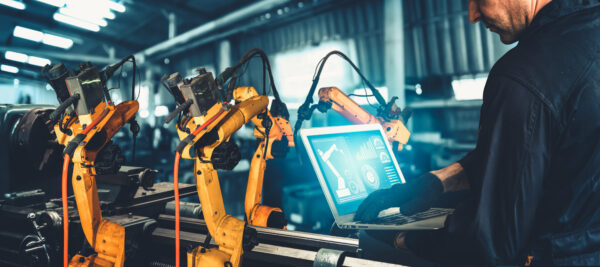
Your robotic system aced every simulation test. Then it went live on the factory floor, and within hours, it was dropping parts, stalling on familiar routes, and failing to communicate with legacy systems it was never designed to meet.
This is one of the most predictable failure patterns in industrial automation, and it traces back to a single root cause: the gap between simulation and reality. Simulation is genuinely useful, it compresses timelines, cuts hardware costs, and lets teams test different scenarios before scaling. But a successful simulation is not proof of a deployment-ready system, because simulations approximate reality in three consistent ways that break down on contact with a real facility.
Simplified physics engines can’t fully replicate friction, wear, mechanical tolerances, and contact forces. So, a robot that grasps components flawlessly in a virtual environment encounters subtly different conditions on every real cycle. Simulated sensors are often perfect whereas real cameras deal with lens distortion, motion blur, and glare; real LiDAR deals with occlusions in real world environments, which are often difficult to simulate. Lastly, simulated environments are orderly in ways that fulfillments centers are not. Order fluctuations, layout changes, shift transitions, and humans doing unpredictable things during their shifts are challenging to simulate.
Integration Compounds the Problem
Even a well-designed robotic system faces a new layer of risk when it meets an existing operation. Most industrial facilities are integrating new automation into environments full of legacy systems, PLCs, SCADA systems, conveyors and older automation, that communicate with different protocols and were never designed to communicate with modern robotics platforms.
These mismatches don’t show up in simulation, but on day one of deployment. They compound a broader pattern found in a Bain & Company survey of automation executives, where 44% of automation projects failed to deliver expected savings, with execution barriers, competing priorities, resource gaps, and integration frictions driving the shortfall.
The Fix: Simulation as a Foundation, Not as the Finish Line
Closing the reality gap doesn’t mean abandoning simulation, it means pairing it with structured physical validation.
Hardware-in-the-loop (HIL) testing integrates real components incrementally into the simulated environment, surfacing integration failures early when they are easier to fix.
Domain randomization deliberately varies textures, lighting, and physical parameters during training, so systems generalize as closely to real-world conditions instead of overfitting to an idealized virtual environment.
Field testing is non-negotiable. No lab environment replicates the actual sensor noise, floor variability, and failure modes a deployed system will encounter. Every physical test phase reveals a different set of issues to solve.
Iterative sim-real co-development treats simulation and deployment as a continuous feedback loop, real-world data refines the simulation model, which improves future training, which improves real-world performance.
The Bottom Line
The automation systems that successfully bridge simulation and reality share one approach: they treat simulation as the beginning of validation, not the end. They test physically, early and continuously, and they build integration challenges into the development process rather than discovering them after go-live.
Closing the gap isn’t about building a better simulation. It’s about building a better validation strategy.
Ready to comprehensively test your automation approach before it goes live?
Schedule an Automation Strategy Call
Primary Sources and Additional Reading:
Walkabout, E., Xing, J., Romero, A., Akinola, I., Garrett, C. R., Heiden, E., Gupta, A., Hermans, T., Narang, Y., Fox, D., Scarmorze, D., & Ramos, F. (2025). The reality gap in robotics: Challenges, solutions, and best practices. arrive. https://arxiv.org/abs/2510.20808
Chukwurah, Naomi & Adebayo, Abiodun & Ajayi, Olanrewaju. (2024). Sim-to-Real Transfer in Robotics: Addressing the Gap between Simulation and Real- World Performance. Journal of Frontiers in Multidisciplinary Research. 05. 33-39. 10.54660/.IJFMR.2024.5.1.33-39. DOI:10.54660/.IJFMR.2024.5.1.33-39
Heric, M., Doddapaneni, P., Atieh, S., & Soppe, M. (2020, April). Intelligent automation: Getting employees to embrace the bots. Bain & Company. https://www.bain.com/insights/intelligent-automation-getting-employees-embrace-bots/
Challenges Faced During Simulating Robotics — Kilobit (2025): kikobot.com
Industrial Automation: The Top 5 Challenges — Where (2025): wheere.com
8 Common Pitfalls in Industrial Automation System Design — Inspire (2025): inspiro.nl
Simulation in Robotics: Bridging the Gap — Aaronic (2025): aitronik.com